US National Debt Clock App
- 99
- 4.2
- Installs
- 5.00K
- Price
- Free

Screenshots
Analysis by Reviewed APKs
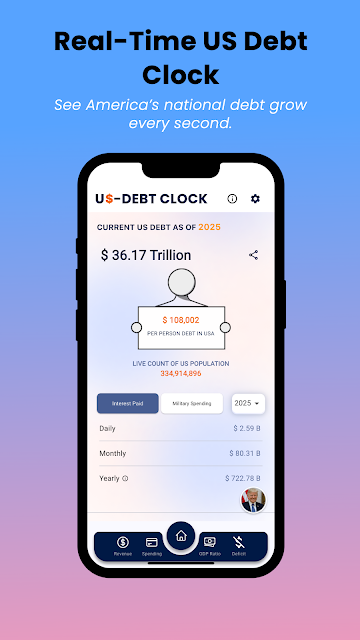
US National Debt Clock App puts a collection of national fiscal figures in one place, including the debt total, debt per person, population, revenue, spending, deficits and debt-to-GDP ratio. I see it as a handy reference for curious readers, students and anyone following public budgets, rather than a tool for making financial decisions. Its appeal is the breadth of the numbers; the main caveat is that figures need context.
A quick check on the numbers
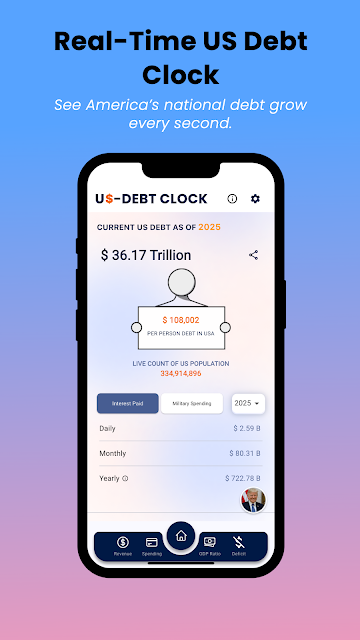
When I want to make sense of a headline about federal borrowing, I would rather check several related figures than stare at one enormous total. This app is built for that kind of quick reference: it brings together the current national debt, debt per person, population data, government revenue and spending, deficits, and the debt-to-GDP ratio. Seeing those measures together gives me a more useful starting point for understanding what a news story is discussing.
A practical use might be a student reviewing a budget lesson, or a reader checking the scale of a figure mentioned in a morning news article. I can open the app, look at the headline debt figure, then compare it with per-person or economy-wide measures. Historical data adds another angle when I want to consider change over time. It is an approachable way to look up fiscal indicators without turning the check into a research project.
A reference, not a finance suite
The closest alternative is probably searching the web for government fiscal data or visiting the public data sources directly. The app's advantage is having several related indicators gathered in one place, with an interface described as simple and clear. For a quick look on a phone, that can be more convenient than opening multiple pages. The description says the figures come from government-authorized data portals, including Treasury fiscal data and Census population data.
That focus also defines what this app is not. It is not a personal budgeting tool, an investment service, or a way to assess an individual's finances. The figures describe national fiscal measures, and the app is presented for informational and educational use. I would not treat a large debt figure by itself as a complete explanation of economic conditions. Anyone needing interpretation should look beyond a single number and consult appropriate, broader sources.
Build a small checking habit
I get more from a data app when I decide what question I am trying to answer before opening it. For this one, that might mean checking the debt-to-GDP ratio alongside the total, or looking at revenue and spending when a discussion turns to the deficit. Those pairings make the figures easier to compare than treating every number as equally meaningful. Historical data can then help me see whether I am looking at a snapshot or a longer-running change.
Notifications may suit people who want occasional updates without remembering to open the app, since custom alerts and update frequency are described as available. I would keep the routine modest: check the relevant figure when a story prompts a question, then use historical data or another public source for context. That approach keeps the app useful as a reference instead of turning a stream of changing numbers into background noise.
More From Our News Desk

Zoom Meetings, Google Meet, or Teams: Which Is Easiest to Join?

How I Build a Free Streaming Lineup With Tubi

Why Crunchyroll Is the Default Anime App for So Many Fans

YouTube TV: A Practical Guide to Cutting Cable

Rummikub and the Small Comfort of Phone Games

TeamViewer Remote Control or AnyDesk for Helping Family?
Who may find it useful
I would recommend US National Debt Clock App to students, news readers and anyone with a general interest in government finances who wants several indicators in one place. It can also be a convenient companion when following a conversation about spending, deficits or debt over time. The mix of current figures and historical data offers a starting point for exploration, while the per-person and debt-to-GDP measures provide alternative ways to look at the headline total.
It may not suit someone looking for personal finance features, detailed economic analysis, or a full explanation of what every movement in the data means. This is a focused information app, not a substitute for reading the underlying sources or comparing different interpretations. I would also be cautious about treating rapidly updated figures as a complete picture on their own. Readers who only want a single occasional statistic may find a web search sufficient.
US National Debt Clock App is a free Android app from FireFly I.T. Solutions. Google Play shows more than 5,000 installs and a 4.2-star rating from 99 ratings. The app contains ads, and the provided store facts say it does not offer in-app purchases. Its content rating is Everyone, making the stated rating suitable for a general audience.
The current version in the provided facts is 1.2.1. The app was released on May 22, 2024, and was last updated on August 18, 2026. It is listed at no cost. Android version requirements can depend on the app build and device, so check Google Play for the requirement that applies to the version available to you.
A Pocket Guide to Public Numbers
A focused first impression
When I first opened a reference app like this, my first question would be whether it quickly gets to the information it promises. The description presents a straightforward collection of national fiscal indicators rather than a broader money-management package. That narrow purpose is helpful: I know to expect public figures and related context, not account setup, household budgets or investment tools.
There is a useful distinction between a number being easy to find and being easy to understand. The app describes its interface as simple and its figures as presented clearly, but a debt total can still feel abstract without comparison. I would approach the first visit with one question in mind, then use the related measures—such as population or debt per person—to make the subject more concrete.
Checking figures day to day
The core experience is about checking public data rather than entering personal information or managing a financial plan. The app covers the current US national debt, per-person debt, population, revenue and spending, deficit values, and the debt-to-GDP ratio. That range gives me several ways to follow a topic in the news without needing to switch immediately between separate reference pages.
The description says updates are real time and that the app uses data from public government sources. In practice, I would treat that as a reason to use it for current reference, not as a promise that every figure is a complete explanation. For careful reading, I would note which metric I am viewing and remember that different indicators answer different questions about the government's finances.
More than one headline total
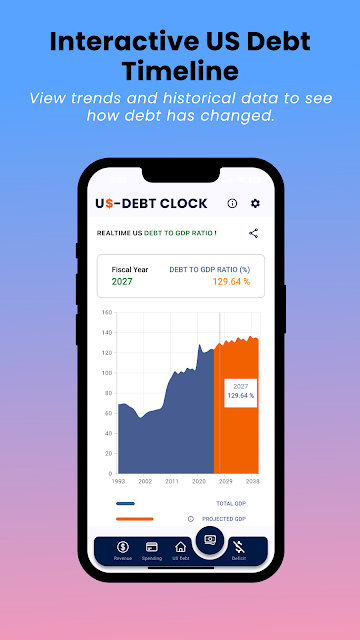
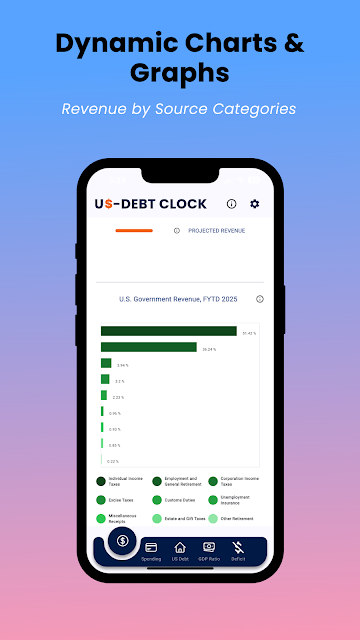
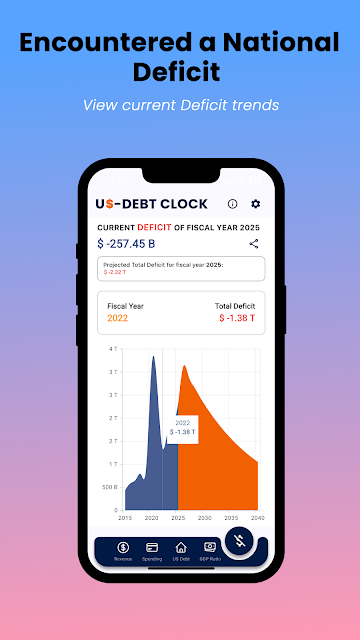
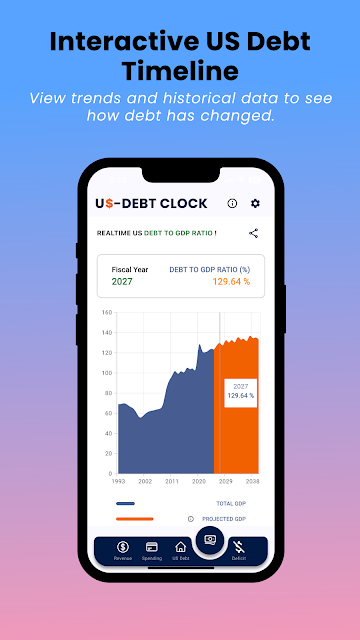
The most useful feature is the range of measures surrounding the headline debt figure. Debt per person offers a different scale, while the debt-to-GDP ratio compares debt with the size of the economy. Revenue, spending and deficit figures add further fiscal context. I like that this combination gives a curious reader more than one entry point, especially when a news story focuses heavily on a single large number.
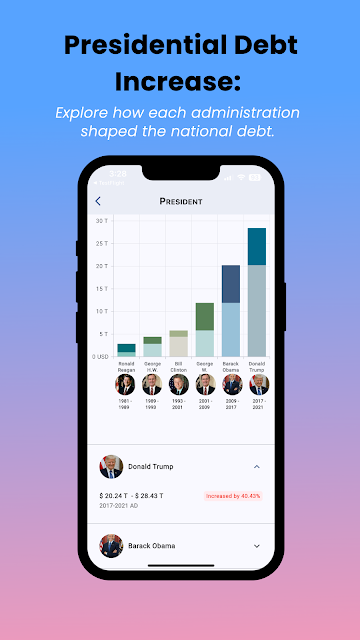
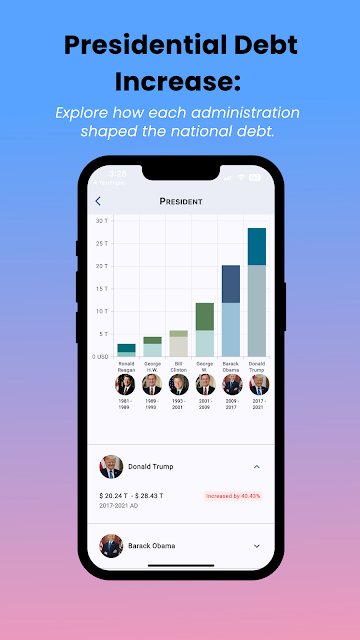
Historical data is another practical addition. A current reading tells me where a figure stands at a particular moment, while past data can help me examine how related measures have changed. The app also describes custom notifications with a preferred update frequency, which could help a regular reader keep up without checking manually every time. Those features keep the focus on public indicators rather than adding unrelated tools.
A useful news-reading routine
A routine I would use is to start with the app when a budget headline catches my attention. I would identify the exact figure being discussed, then look at a related measure: spending and revenue when the topic is a deficit, or debt-to-GDP when the story is about the broader scale of borrowing. If the question is about change over time, historical data gives me a reason to look beyond the current snapshot.
For a class or a discussion group, I would use the figures as prompts for questions rather than as a finished lesson. What period does a number describe? Which other measure helps explain it? The app is described as an educational resource, and its range of indicators suits that role. I would still consult the underlying public sources when precision or detailed methodology matters, because a quick reference is only one part of understanding fiscal data.
Keep the context in view
The biggest limitation is inherent in the subject: a changing number does not tell its own story. A debt total, per-person figure or deficit value can be useful, but interpretation depends on what is being measured and the wider economic context. The app presents indicators; readers still need to think carefully about what comparisons are relevant and avoid drawing broad conclusions from one figure.
The app also has a specific scope. It focuses on US national fiscal statistics, so it is not a general economics library or a personal finance dashboard. Ads are present, which is worth keeping in mind for anyone who prefers an uninterrupted reference experience. I would use it as a convenient starting point, then turn to source material or broader reporting when I need deeper explanation.
US National Debt Clock App has a clear job: put several US fiscal indicators and historical data within easy reach. I like the idea of checking related figures together instead of relying on a single headline total. Its informational focus is also easy to understand, provided I remember that data and interpretation are not the same thing.
I would recommend it to students and curious readers who want a compact public-data reference, especially when following budget news. It is less compelling for anyone seeking personal finance tools or detailed economic analysis. Used as a starting point and paired with context, it can make a complicated subject easier to explore.
US National Debt Clock Frequently Asked Questions
What is US National Debt Clock App used for?
US National Debt Clock App is for checking US fiscal indicators, including the national debt, debt per person, population, revenue and spending, deficit values, and debt-to-GDP ratio. It also describes historical data and custom notifications. It is an informational and educational reference, not a personal finance or investment service.
Which devices can run US National Debt Clock App?
The app is available for Android through Google Play. The provided details do not give a specific minimum Android version, and requirements can vary by app build and device. Check the Google Play page for the current compatibility information before installing.
Does US National Debt Clock App cost money?
The app is listed as free, with no in-app purchases in the provided store facts. It does contain ads. Availability and store details can change, so check Google Play for the current information for your region and device.
Where does US National Debt Clock App get its figures?
The app says it draws information from public US government data portals, including Treasury fiscal data for debt figures and Census population data. It is presented as an informational resource and says it is not affiliated with the US Treasury or another government entity. For detailed methodology, consult the underlying sources.
Who is US National Debt Clock App best for?
It may suit students, news readers and people curious about US fiscal statistics who want several related figures in one place. It may not suit someone looking for personal budgeting, investment features or extensive economic explanations. The app provides indicators for reference; users still need context to interpret them.
Pros
- Presents debt, deficits, revenue, spending and related measures in one focused reference app.
- Includes per-person figures and debt-to-GDP data for alternative ways to view the subject.
- Historical data and customizable notifications support occasional or ongoing tracking.
- Free to install, with no in-app purchases stated in the store facts.
Cons
- Ads may interrupt an otherwise focused reference experience.
- Fiscal figures need outside context; the app does not replace deeper economic research.
- Its US national-data focus will not suit personal finance or broader international comparisons.
- Category
- Finance
- Version
- 1.2.1