Learning English: Podcast
- 1.27K
- 4.8
- Installs
- —
- Price
- Free
Screenshots

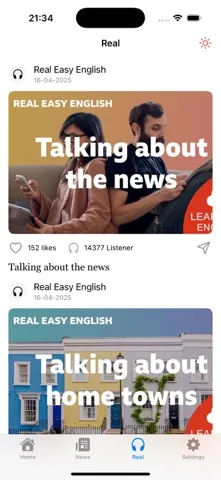
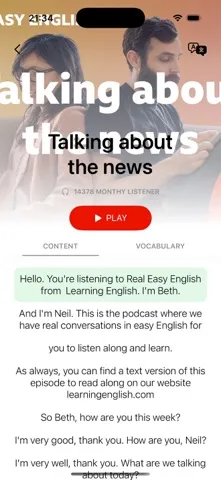
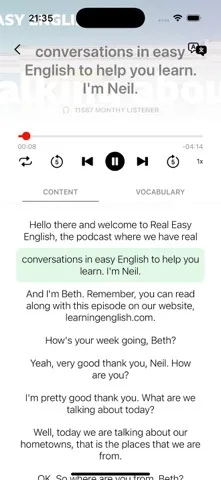
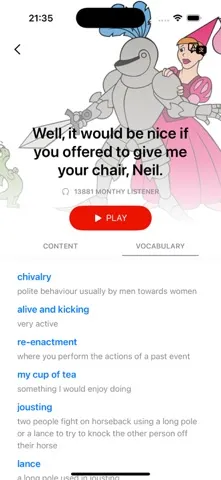
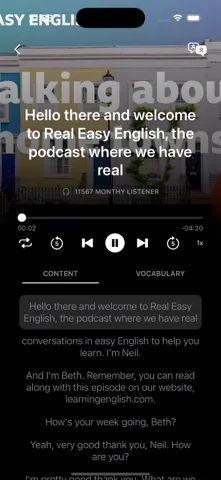
Analysis by Reviewed APKs
Learning English: Podcast is an iPhone and iPad learning app for people who want to build listening, vocabulary, grammar, and speaking skills in small sessions. It brings audio lessons together with translation, quizzes, flashcards, and AI-supported speaking practice. I like the breadth of that mix: it can serve as a convenient daily study companion, though learners looking for a full classroom course may want more structure.
A Small Daily Study Session
Picture a short break between errands or a quiet stretch on the bus. I’d open Learning English: Podcast, choose an audio lesson, and spend a few minutes listening to native English speakers. The short-lesson approach suits a routine that is hard to schedule around a textbook. I can focus on pronunciation and rhythm while listening, then use the app’s vocabulary or grammar material when I have a little more time.
A useful follow-up is to pick out a word or phrase that was new to me and check its meaning with the translation feature. Flashcards organized by topic and examples connected to real-life use offer another way to revisit vocabulary. If I have time, I can try a quiz or speak aloud with the AI Teacher. That gives a quick session a natural order: listen, clarify, recall, and practice.
More Than a Podcast Player
The obvious alternative is to listen to English podcasts on a general audio app. That works well for exposure, but Learning English: Podcast is aimed more directly at learners: alongside audio, it brings together grammar lessons, topic-based vocabulary, translation, quizzes, and speaking practice. It also draws on short lesson formats associated with programs such as 6 Minute English, 6 Minute Grammar, and 6 Minute Vocabulary.
I would treat it as a study companion, not as a replacement for a teacher, a comprehensive course, or the experience of having a real conversation. The app’s AI-supported speaking tools can offer practice and feedback, but they are not the same thing as a human tutor. Its beginner-to-intermediate focus may also make it less appealing to advanced learners looking for specialist or highly in-depth material.
Make Short Practice Count
The easiest way to get value from the app is to keep the goal modest. I’d choose one short lesson for a spare moment rather than waiting for a long, uninterrupted study block. Listening first gives me a feel for the sound of English; a translation can help when a phrase gets in the way. Then a quick quiz or a few flashcards can make the new material easier to revisit.
For speaking, I’d use a quiet moment to try the voice-recognition practice or talk with the AI Teacher, then pay attention to the feedback rather than rushing through several prompts. Personalized study plans and goal tracking can help give these sessions direction, while daily quizzes offer a simple check-in. A routine that alternates listening, vocabulary, grammar, and speaking should feel more balanced than repeating only the easiest activity.
More From Our News Desk

Zoom Meetings, Google Meet, or Teams: Which Is Easiest to Join?

How I Build a Free Streaming Lineup With Tubi

Why Crunchyroll Is the Default Anime App for So Many Fans

YouTube TV: A Practical Guide to Cutting Cable

Rummikub and the Small Comfort of Phone Games
TeamViewer Remote Control or AnyDesk for Helping Family?
Who May Find It Useful
I’d recommend Learning English: Podcast to beginners and intermediate learners who want several kinds of practice in one place. It should suit students, travelers, and working professionals who can fit short lessons into a busy day. People who enjoy listening-based learning may especially appreciate having audio alongside translation, vocabulary, and grammar tools, with speaking practice available when they want to work on producing English as well.
It may be a weaker fit for someone who wants a formal course with a detailed syllabus, extensive advanced material, or regular instruction from a human teacher. Learners who prefer one dedicated tool for each skill may also find the all-in-one approach unnecessary. I’d think of it as a flexible supplement: useful for building a habit and practicing familiar skills, but not a promise of fluency on its own.
Learning English: Podcast is an Education app by Minh Le Cong. On the App Store, it has a 4.8 out of 5 rating from 1,274 ratings. The app is free to download, with a listed price of $0.00. Its content rating is 4+, and it requires iOS 16.0 or later.
The current version is 1.1.7. The app was released on April 17, 2025, and its most recent update was June 24, 2026. Those details give iPhone and iPad users a quick sense of its platform and software requirements before they decide whether to try its lessons.
How the Learning Tools Fit Together
A Clear Starting Point
On first opening Learning English: Podcast, I’d expect the short-lesson idea to be the easiest place to begin. The app is built around several familiar parts of language study rather than a single stream of audio: listening, vocabulary, grammar, and speaking all have a place. That makes it approachable if I know what skill I want to work on, even when I only have a few minutes.
The range of tools also means I would not try to explore everything at once. I’d start with a short audio lesson, then try one supporting feature, such as a translation or vocabulary flashcard. This gives me a feel for how the parts work together without turning a quick study break into a tour of every option.
A Flexible Learning Rhythm
Day to day, the audio lessons are a natural anchor. Listening to native speakers can help me notice pronunciation and rhythm, while the practical content gives me something to follow rather than treating English as background noise. Because the lessons are described as short, they can fit into a commute or a break more easily than a long study session.
The supporting activities make it easier to change gears when listening alone is not enough. I can work on grammar with a concise lesson, review essential words by topic, or use a daily quiz to revisit what I have learned. That variety is useful for keeping practice from feeling repetitive, though it still takes a little intention to choose what to focus on each day.
Tools for Different Skills
The most distinctive part of the mix is that listening practice sits alongside speaking tools. The description includes both voice-recognition practice with real-time feedback and a conversational AI Teacher that can offer corrections. I like the idea of moving from hearing English to trying it aloud without having to switch to a separate kind of study activity.
Translation is another practical bridge, especially when an unfamiliar word or phrase interrupts a lesson. Topic-based flashcards add a more focused way to build vocabulary, and real-life examples can help put words in context. Short grammar lessons round out the set. These tools cover different needs, so the app is more compelling as a collection of practice options than as just a podcast feed.
Daily quizzes, personalized study plans, and goal tracking add a planning layer to the lessons. I would use those features to keep a small routine on track, not to turn every day into a test. Together, they give learners ways to revisit material and set a direction, while the audio and speaking activities provide more active practice.
A Practical Weekly Routine
For a realistic routine, I’d begin a session with one audio lesson and listen for the general idea before stopping over every unfamiliar word. If something remains unclear, I can use translation to check it. That order keeps the lesson moving and gives me a reason to pay attention to pronunciation and rhythm, rather than reading everything as isolated vocabulary.
After listening, I’d choose one small follow-up: review a few topic flashcards, take a quiz, or try speaking practice. On a day when I have more energy, I could add a grammar lesson or talk with the AI Teacher. Personalized plans and goal tracking can help make this routine more deliberate, while leaving room to keep a session short when the day is busy.
Keep Expectations Grounded
An all-in-one learning app has to divide attention across its tools. Someone who wants a deep grammar reference or a long, structured course may find short lessons limiting. Likewise, voice-recognition feedback and an AI conversation tool provide practice, but they should not be mistaken for the nuance of a conversation with a person. The best fit is a learner who values convenient repetition and variety.
The app’s stated audience is beginner to intermediate learners, so advanced users may not find enough depth for specialized goals. Its references to IELTS, TOEIC, and TOEFL indicate test preparation as a possible use, but I would not assume the app alone covers every requirement of those exams. It makes more sense as one practice resource among other learning methods.
Finally, a tool can only help if it becomes part of a routine. Short lessons make starting easier, but progress still depends on returning to the material and trying more than one skill. I’d keep expectations practical: use the app to get regular exposure, review words and grammar, and practice speaking, while choosing other resources when I need more depth.
Learning English: Podcast brings useful variety to a compact study routine. Audio lessons, translation, flashcards, grammar, quizzes, and AI-supported speaking practice give learners several ways to work on English without opening separate tools for every activity. Its short-session approach is the main appeal, especially for beginners and intermediate learners balancing study with a full day.
I’d recommend giving it a try if you want convenient, varied practice and are comfortable learning independently. I would not rely on it as a complete course or a substitute for human conversation. Used as a regular companion for listening, review, and speaking practice, it offers a practical way to make small pockets of time count.
Learning English Frequently Asked Questions
What is Learning English: Podcast used for?
Learning English: Podcast is for practicing English through audio lessons, grammar lessons, topic-based vocabulary, translations, quizzes, and speaking activities. It is aimed at beginner to intermediate learners and can support listening, vocabulary, grammar, and speaking practice. The app’s short lessons make it suitable for fitting study into a brief daily break.
Which devices can run Learning English: Podcast?
Learning English: Podcast is available for Apple devices and requires iOS 16.0 or later. It is listed on the App Store. Check the App Store entry for current compatibility details for a particular device, since device support and software requirements can vary over time.
Does Learning English: Podcast work on Android?
The app is listed for Apple devices on the App Store. I would check the store listing for current platform availability rather than assume an Android version is available. For an iPhone or iPad, the stated minimum requirement is iOS 16.0.
Does Learning English: Podcast cost money?
Learning English: Podcast is free to download, with a listed price of $0.00 on the App Store. Check its current store page for the latest purchase and pricing details, since app terms can vary. The store listing is the best place to confirm what applies when you download it.
Is Learning English: Podcast suitable for beginners?
The app describes itself as suitable for beginner to intermediate English learners, including students, travelers, and working professionals. Its mix of short audio, translations, flashcards, grammar, quizzes, and speaking practice may suit learners who want varied independent study. Advanced learners seeking in-depth specialist material may want additional resources.
Pros
- Combines listening, grammar, vocabulary, translation, quizzes, and speaking practice in one app.
- Short audio lessons can fit into everyday breaks and busy schedules.
- Topic-based flashcards and real-life examples give vocabulary practice useful context.
- AI-supported speaking practice offers another way to work on fluency.
Cons
- Short lessons may not provide the depth some learners want from a full course.
- AI feedback is not a substitute for practice with a human conversation partner.
- Its beginner-to-intermediate focus may leave advanced learners wanting more.
- Category
- Education
- Version
- 1.1.7