IELTS Prep App - Practice
- —
- —
- Installs
- 10.00K
- Price
- Free
Screenshots
Analysis by Reviewed APKs
IELTS Prep App - Practice is a study companion for people preparing for the IELTS exam, with practice for speaking, writing, reading, and listening. I like that its mix of simulated speaking, timed reading, and AI feedback gives learners several ways to work on exam skills in one place. It suits independent students who want regular practice, though it is better treated as a practice aid than a substitute for a full course.
A Study Session That Fits
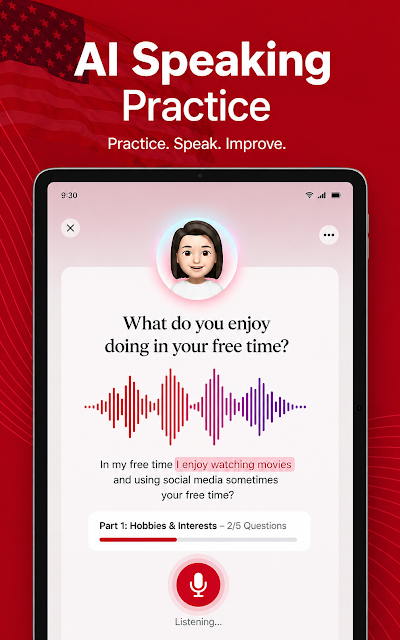
When I picture fitting this app into a normal study day, I imagine using a short break to work through a speaking cue card, then returning later for a timed reading passage. The speaking simulation includes follow-up questions, so it gives the session a more exam-like shape than simply reading sample prompts. Afterward, AI feedback can point out areas such as fluency, vocabulary, pronunciation, and coherence to revisit.
That structure is useful when I have limited time and want a concrete task rather than a vague plan to study English. I could focus one session on speaking and another on Writing Task 1 or Task 2, using the suggested evaluation to decide what deserves another pass. The app also describes personalized support based on strengths and weaknesses, which may help make practice feel more directed than repeating the same exercise.
A Practice Companion, Not a Course
IELTS Prep App - Practice brings several exam skills together, which makes it a convenient alternative to jumping between separate practice resources. Its simulations, academic reading passages, question types, and writing topics are aimed at IELTS preparation rather than general English study. I would use it when I want focused exam-style work and feedback, especially during the stretch when consistent practice matters more than collecting more study materials.
It is not described as a complete language course, a live tutoring service, or an official exam provider, so I would not expect it to replace instruction or every part of a broader study plan. Its strongest role is helping learners rehearse task formats and notice areas to improve. If I needed detailed human guidance or a full curriculum from beginner level onward, I would look for those separately and use this as one practice tool.
Small Habits, Better Practice
I would get more from the app by choosing one skill for each session instead of trying to cover all four every day. A speaking round followed by a quick review of the feedback is a tidy routine; on another day, a timed reading passage can provide a different kind of focused work. Keeping sessions manageable makes it easier to return regularly, which is the point of the app’s daily-practice emphasis.
For writing, I would treat Task 1 and Task 2 as separate practice blocks, then use the AI evaluation to spot grammar, vocabulary, or coherence issues worth reviewing. With speaking, I would pay attention to recurring feedback rather than chasing a single band estimate. The app presents estimates and feedback as study support, so I would use them to guide the next exercise, not as a definitive prediction of an exam result.
More From Our News Desk

Zoom Meetings, Google Meet, or Teams: Which Is Easiest to Join?

How I Build a Free Streaming Lineup With Tubi

Why Crunchyroll Is the Default Anime App for So Many Fans

YouTube TV: A Practical Guide to Cutting Cable

Rummikub and the Small Comfort of Phone Games
TeamViewer Remote Control or AnyDesk for Helping Family?
Who may find it useful
I would recommend IELTS Prep App - Practice to learners who already know they are preparing for IELTS and want a straightforward way to rehearse several exam skills. The mix of AI speaking practice, writing evaluation, and timed reading gives self-directed students a set of practical activities to work through. It may also suit someone who wants to make short study sessions more purposeful instead of spending each one deciding what to practice.
It may be a weaker fit for people who want a teacher-led course, live conversation with a tutor, or broad English lessons unrelated to the IELTS format. The app’s AI feedback and band estimates can offer useful prompts for self-review, but learners should be comfortable working independently and interpreting feedback as guidance. Those who prefer a structured classroom or personalized human instruction may want to pair it with other support.
IELTS Prep App - Practice is an Education app from AndroVision Apps. Google Play shows more than 10,000 installs. It is free to download, with in-app purchases priced from $4.99 to $39.99 per item. The app contains no ads, and its content rating is Everyone. Those details make it possible to start practicing without an upfront purchase, while paid items may be relevant depending on how you use the app.
The listed version varies with device. Google Play gives a release date of May 9, 2026. A minimum Android version and a last-update date are not included among the available app details, so compatibility information can vary by device and is worth checking on Google Play before installing. No rating or rating count is provided here, so I have left those figures out.
Turning IELTS Practice Into a Routine
Getting Started
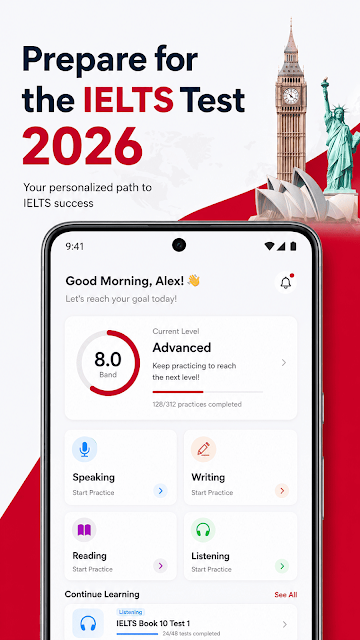
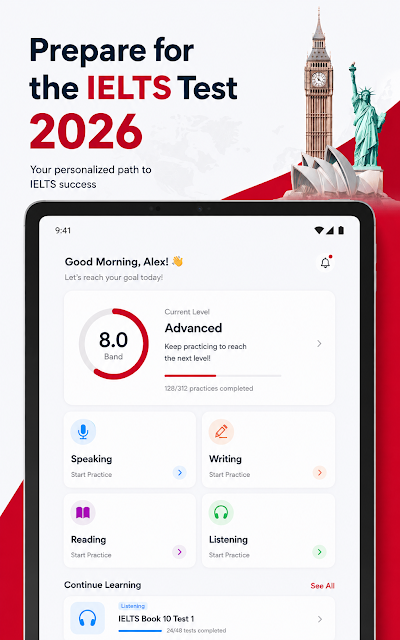
My first impression is of an app with a clear exam-preparation purpose: it brings speaking, writing, reading, and listening practice under one roof. That breadth is helpful when I want one place to turn for a study task, rather than choosing a different resource for every skill. The description emphasizes realistic practice and feedback, giving the app a more hands-on focus than a simple collection of exam tips.
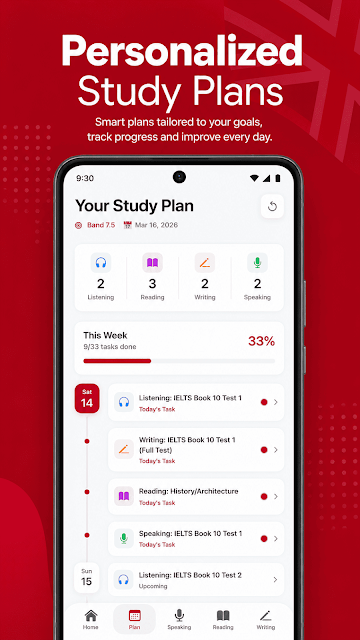
I would start by picking the skill that feels least comfortable and trying one activity there, rather than treating the whole app as a checklist to finish immediately. The app describes personalized support based on a learner’s level, strengths, and weaknesses, so that seems like a sensible way to orient practice. I would also keep expectations practical: it is a study companion, and progress still depends on the time and attention I bring.
The Daily Practice Loop
The day-to-day appeal is the variety of ways to practice without changing apps. A speaking simulation gives me prompts to answer, while writing tasks offer a more deliberate chance to organize ideas and review language. Reading practice adds passages and multiple question types, with timed sessions designed to resemble exam conditions. That variety can help break up a week of study and keep practice tied to the skills IELTS tests.
I would make each session end with one clear next step: redo a weak area, try another prompt, or switch skills next time. AI feedback can flag grammar mistakes, vocabulary use, coherence, and pronunciation issues, depending on the exercise. That is useful for reflection, but it is still feedback to interpret rather than a reason to assume every suggestion is equally important. A little note-taking alongside practice would help me remember patterns.
Feedback With a Purpose
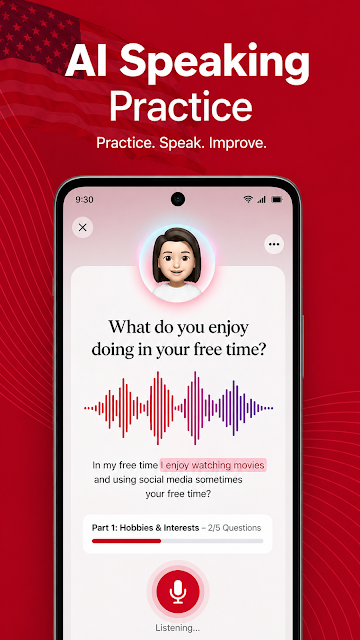
The most distinctive feature is the AI-supported speaking practice. The app describes realistic IELTS simulations with cue cards and follow-up questions, then feedback focused on fluency, vocabulary, pronunciation, and confidence. That gives a learner a way to rehearse answering aloud and review particular aspects of delivery. I like the practical shape of that: respond to a prompt, then think about one or two changes before the next attempt.
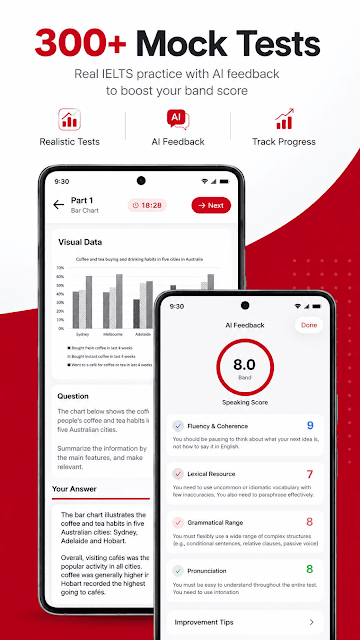
Writing gets its own focused treatment through Task 1 and Task 2 topics, sample answers, and AI evaluation. The app also provides band score estimates for speaking and writing, which can give practice a point of reference. I would treat those estimates as part of the learning process, not as a final measure of exam readiness. The useful part is seeing what the feedback highlights and deciding what to work on next.
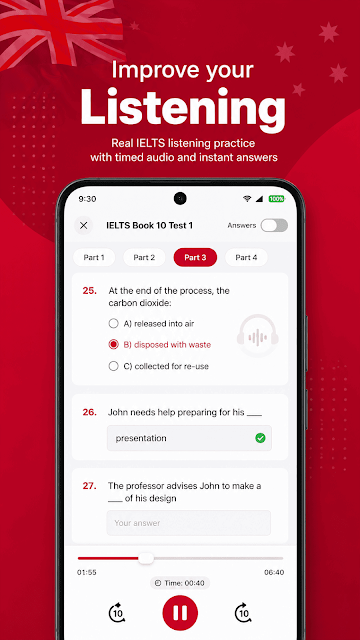
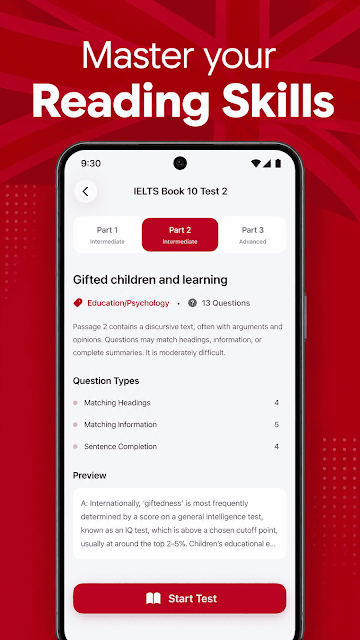
For reading, academic passages, several question types, and timed practice create a more exam-oriented exercise than unstructured reading. The description also includes listening among the skills covered, though it does not spell out the listening activities in the same detail. Taken together, the tools give learners a broad practice menu, with the most specifically described feedback attached to speaking and writing.
A Practical Weekly Rhythm
A realistic routine could be a short speaking simulation on one day, a timed reading passage the next, and a writing task later in the week. I would avoid turning every session into a full mock exam; smaller tasks are easier to fit around work or classes and give me time to review what happened. The app’s emphasis on daily practice supports that steady approach without requiring every visit to be long.
At the end of a week, I would look back at the feedback and choose a recurring weakness for the next few sessions. If grammar keeps coming up in writing, I could focus on a fresh Task 1 or Task 2 response; if speaking feedback points to vocabulary, I could keep that in mind during another cue-card simulation. This makes the app’s progress and personalized-support ideas more actionable than simply moving from one activity to another.
Keep Expectations Grounded
AI feedback can make independent practice feel more informative, but it is not the same as having a teacher explain a problem in conversation or tailor a whole course around it. The app’s band estimates are useful as a reference point within practice, yet I would not use them as a promise about an official exam outcome. Learners who need extensive explanations or personalized human coaching may need additional resources.
The app covers a lot of ground, but the description gives more detail about speaking, writing, and reading than listening. That means I would look at the available listening practice in the app itself before deciding whether it meets my needs in that area. More generally, the best results will come from regular, thoughtful use; merely opening a practice tool does not replace sustained work on language skills.
IELTS Prep App - Practice earns its place as a practical study companion by combining exam-style exercises with AI feedback across several skills. I especially like the focused speaking simulations and the separate writing tasks, which give independent learners something specific to work on. Its value is in making regular practice easier to organize, not in replacing a teacher or an entire preparation course.
I would try it if I were preparing for IELTS and wanted flexible practice sessions I could fit into a busy week. Learners who rely on human feedback or want a complete, teacher-led curriculum may find it best as a supplement. Used with realistic expectations and a habit of reviewing feedback, it looks like a useful way to add structure to exam preparation.
IELTS Prep App Frequently Asked Questions
What is IELTS Prep App - Practice used for?
IELTS Prep App - Practice is for preparing for IELTS through practice in speaking, writing, reading, and listening. It describes AI speaking simulations, writing evaluation, academic reading passages, and timed practice. Learners can use it to rehearse exam-style tasks and review feedback on areas such as fluency, vocabulary, grammar, and coherence.
Which devices can run IELTS Prep App - Practice?
The app is listed for Android on Google Play. The minimum Android version is not specified in the available details, and compatibility can vary by device. Check the Google Play store page for the requirements that apply to your phone or tablet before installing.
Does IELTS Prep App - Practice cost money?
The app is free to download and includes in-app purchases priced from $4.99 to $39.99 per item. It contains no ads. Which purchases are available and their current details may vary, so check Google Play for the latest information before buying.
Does IELTS Prep App - Practice give IELTS band scores?
The app describes AI feedback and band score estimates for speaking and writing practice. These can help learners review performance and decide what to work on next. I would treat them as practice guidance rather than a definitive result or an official IELTS score.
Who is IELTS Prep App - Practice best for?
It may suit IELTS candidates who want flexible, independent practice across several exam skills, especially those interested in AI-supported speaking and writing feedback. It may be less suitable as a sole resource for learners who want live tutoring, a teacher-led course, or broad English instruction beyond IELTS preparation.
Pros
- Combines speaking, writing, reading, and listening practice in one IELTS-focused app.
- AI speaking simulations use cue cards and follow-up questions for structured rehearsal.
- Writing tasks cover Task 1 and Task 2 with topics, sample answers, and evaluation.
- Timed academic reading practice offers passages and multiple question types.
Cons
- AI band estimates are practice references, not official exam results.
- The app is focused on IELTS preparation rather than broad English lessons.
- Learners seeking live tutoring or teacher-led instruction may need other resources.
- Category
- Education