FreeTaichi - Tai Chi video
- —
- —
- Installs
- 5.00K
- Price
- Free

Screenshots
Analysis by Reviewed APKs
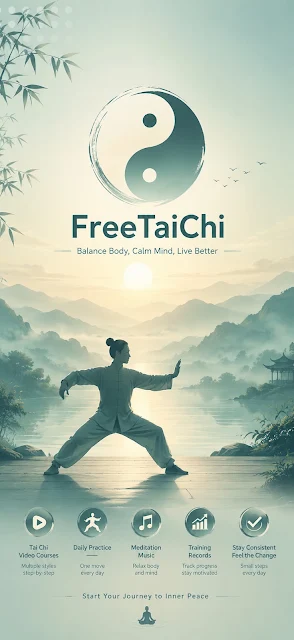
FreeTaichi - Tai Chi video is a video-guided wellness app for people who want to explore Tai Chi, Baduanjin, gentle movement, or guided meditation without gym equipment. I see it as a practical starting point for beginners and anyone trying to make a little room for movement in a busy day. Its mix of routines is appealing, though it is more of a guided exercise companion than a complete fitness program.
A Short Break for Movement
When I imagine using FreeTaichi in an ordinary week, it is during the gap between work and dinner: I have a few minutes, no equipment nearby, and want to move rather than scroll. The app’s video-guided Tai Chi and gentle exercise focus suits that moment. Baduanjin is another option for a calmer, low-impact session, while guided meditation offers a different way to wind down.
I would approach the videos as instruction to follow at a comfortable pace, not as a workout I need to rush through. The description presents step-by-step guidance for beginners, which makes the app sound approachable if I have never tried Tai Chi. It also mentions brief sessions for busy schedules, so the intended use is easy to picture: choose a small window, follow along, and return to the rest of the day.
A Different Kind of Fitness App
FreeTaichi occupies a gentler corner of Health & Fitness than apps centered on running, strength circuits, or tracking exercise metrics. Its emphasis is on video instruction for Tai Chi, Baduanjin, low-impact movement, and meditation. That makes it a reasonable choice for someone curious about these practices or looking for guided movement at home, rather than someone primarily seeking intense cardio or a structured gym program.
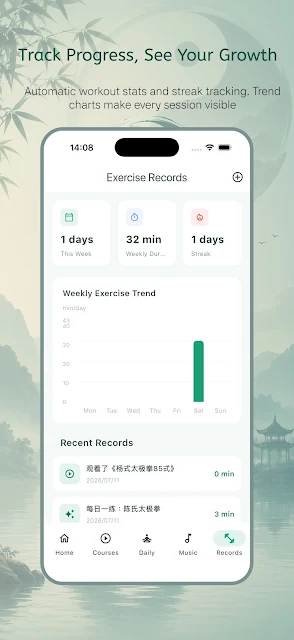
It is also not presented as a personalized coaching service or a general health tracker. The description focuses on following routines and audio-visual meditation guidance, not logging activity, building training plans, or measuring progress. I would choose it for accessible movement ideas and a calmer pace, then look elsewhere if I wanted detailed workout analytics or a broad library of unrelated exercise styles.
Make Small Sessions Easier
A useful habit would be to connect a routine to something already in my day: a short movement break after sitting for a while, or a meditation session before bed. The app’s description specifically frames its exercises as fitting into lunch breaks, commutes, and bedtime. Those are suggestions for when to practice, not a demand to turn every spare minute into a workout.
I would keep the first sessions simple: try one guided option, notice whether the pace and style suit me, and come back to it when convenient. Alternating a Tai Chi routine with Baduanjin or meditation could help the app feel less repetitive, while still staying within its main focus. Since the description does not detail a tracking system, I would treat consistency as a personal habit rather than expect the app to manage it.
More From Our News Desk

Zoom Meetings, Google Meet, or Teams: Which Is Easiest to Join?

How I Build a Free Streaming Lineup With Tubi

Why Crunchyroll Is the Default Anime App for So Many Fans

YouTube TV: A Practical Guide to Cutting Cable

Rummikub and the Small Comfort of Phone Games

TeamViewer Remote Control or AnyDesk for Helping Family?
Who May Enjoy FreeTaichi
I would recommend FreeTaichi to beginners who want video-led introductions to Tai Chi, as well as people who prefer gentle movement over high-intensity exercise. Its combination of traditional routines, Baduanjin, low-impact exercises, and meditation gives someone a few related ways to approach a short wellness break. The no-equipment focus described also makes it appealing for home use or a small amount of open space.
It may be less suitable for people who need demanding workouts, detailed performance tracking, or tailored coaching. The app’s description emphasizes accessible routines and calming practice, rather than progressive strength plans or exercise data. People with particular physical needs should decide whether the movements are appropriate for them; the app is an exercise and meditation resource, not a substitute for individualized professional guidance.
FreeTaichi - Tai Chi video is developed by AnyAi and is listed in Health & Fitness. On Google Play it has over 5,000 installs. The app is free, and the provided store facts say it contains no ads and offers no in-app purchases. Its content rating is Everyone, so the listing assigns it a general-audience rating.
The current version is shown as varying with device. The provided facts give a release date of November 4, 2025, but do not include a latest update date or a minimum Android version. I would check the Google Play listing on the device I plan to use for current compatibility details.
Making Room for Gentle Practice
A Clear First Impression
The first thing I take from FreeTaichi’s description is its focused scope. It is built around video-guided Tai Chi and related gentle wellness activities, rather than trying to cover every kind of workout. That makes it fairly easy to understand what I would be opening it for: a guided movement session, a Baduanjin routine, or audio-visual meditation.
For a beginner, step-by-step instruction is an inviting premise. I would want to start with a routine that feels manageable and give myself time to follow the movements, rather than treating the video as background. The material does not spell out a setup process or account requirements, so I would keep expectations to what it clearly describes: guided content for practice.
The Everyday Experience
The app’s everyday appeal rests on making gentle movement feel easy to pick up. The description suggests that routines can fit into brief breaks, including at lunch or before bed. That is a sensible framing for people who struggle to set aside a full workout block. A short session can be a more realistic starting point than an ambitious schedule I am unlikely to keep.
Video guidance changes the experience from reading about movements to following along with them. It gives the app a practical role when I want an example to watch as I practice. The listing describes the workouts as low impact and requiring no equipment, though the amount of space and pace that work for a particular person will depend on the routine and their circumstances.
Tai Chi and More
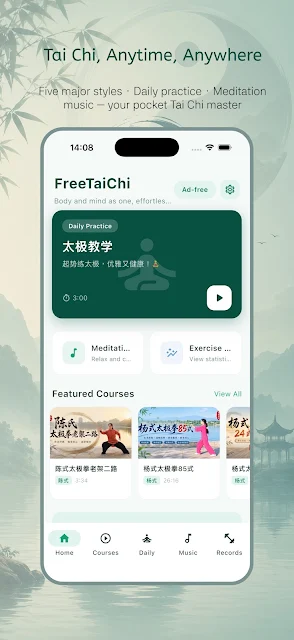
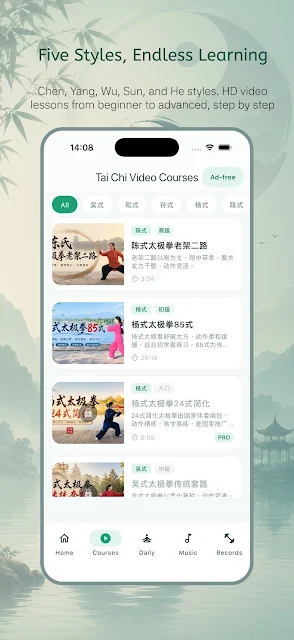
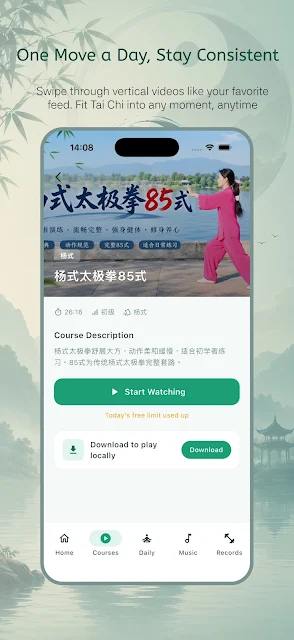
The central feature is a collection of traditional Tai Chi routines with step-by-step instruction intended to help beginners learn techniques. That instructional angle is important: the app is not described simply as a collection of exercise clips, but as video guidance for following the movements. It gives curious newcomers a place to begin without needing to know a sequence in advance.
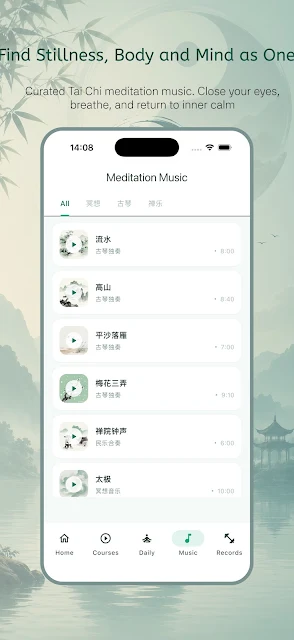
Baduanjin adds a related practice to the mix, described as gentle qigong. The app also includes low-impact wellness exercises and guided meditation with audio-visual guidance. Together, those options let users choose between movement and a quieter mindfulness session. I would not assume each option works in the same way; they serve different moods and moments even though they share the app.
A Routine That Can Stick
One practical way I would use FreeTaichi is to attach a short session to a regular cue. After a long stretch at a desk, I could take a break for a gentle routine; in the evening, I might choose meditation instead. The description itself points to busy-day moments such as lunch breaks and bedtime, so the app’s format seems intended to work around ordinary schedules.
I would resist the temptation to begin with a complicated plan. Trying one type of content at a time would help me learn whether I prefer Tai Chi, Baduanjin, or meditation. Once I found a comfortable option, I could repeat it when it fits. This keeps the app useful as a low-pressure companion instead of another calendar obligation.
Keep Expectations Grounded
FreeTaichi’s focus is also its main limitation. The supplied description highlights Tai Chi, Baduanjin, general low-impact movement, and meditation, but does not present it as a broad exercise platform. Anyone looking for strength training, running plans, or detailed workout tracking may find that its particular emphasis does not match their needs.
The wellness language around stress, sleep, flexibility, balance, and other benefits should be read as the app’s intended context, not a promise of an individual result. What feels comfortable can differ from person to person. I would choose movements that suit my abilities and stop if something feels wrong, rather than assuming every routine is right for every user.
There is also little practical detail in the supplied information about specific session lengths or how content is organized. That makes it harder to know exactly how much variety or structure to expect before trying it. The core idea is clear, though: guided, gentle practices for people who want an accessible way to explore Tai Chi and related routines.
FreeTaichi - Tai Chi video makes sense as a modest, focused companion for people who want to try gentle movement or meditation at home. I like the combination of beginner-oriented Tai Chi instruction, Baduanjin, and short-session framing. It does not try to be a full fitness tracker, and that narrow purpose can be a plus if it matches what you want.
I would give it a try if I were new to Tai Chi or wanted a calmer alternative to a conventional workout app. If my priority were intense training, detailed tracking, or a personalized plan, I would look elsewhere. For a low-pressure entry point into guided practice, FreeTaichi sounds approachable and practical.
FreeTaichi Frequently Asked Questions
What is FreeTaichi - Tai Chi video used for?
FreeTaichi - Tai Chi video is for following video-guided Tai Chi routines, Baduanjin and other low-impact exercises, as well as guided meditation. The description presents it as useful for beginners and for fitting short wellness sessions into a busy day. It is focused on these practices rather than general workout tracking.
Which devices can run FreeTaichi - Tai Chi video?
FreeTaichi - Tai Chi video is an Android app available through Google Play. The current version is shown as varying with device. For specific device compatibility and current availability, check the Google Play listing on the device you want to use.
What Android version does FreeTaichi - Tai Chi video require?
The minimum Android version can vary or depend on the device and current app release. The provided app details do not give a single minimum requirement, so check the Google Play listing for the compatibility information shown for your phone or tablet before installing.
Does FreeTaichi - Tai Chi video cost anything?
FreeTaichi - Tai Chi video is listed as free. The provided store facts say it has no in-app purchases and contains no ads. Store details can change, so it is worth checking the Google Play listing for the latest information before you install or use the app.
Is FreeTaichi - Tai Chi video suitable for beginners?
The app’s description specifically presents its Tai Chi routines as step-by-step instruction for beginners, and it also includes gentle movement and meditation. It may suit people who want an accessible introduction. Its routines may not fit everyone’s abilities or preferences, so choose content carefully and check the store description for current details.
Pros
- Combines beginner-oriented Tai Chi videos with Baduanjin and guided meditation.
- Low-impact exercise focus is suited to brief, equipment-free practice.
- Free to use, with no ads or in-app purchases in the provided store facts.
- Content is framed for everyday breaks as well as home sessions.
Cons
- Its narrow wellness focus will not replace a broad workout or tracking app.
- The provided details do not specify session lengths or a minimum Android version.
- Gentle routines may not satisfy users seeking intense or progressive training.
- Category
- Health & Fitness