Floating Sandbox
- 1.40K
- 4.8
- Installs
- 50.00K
- Price
- $4.49
Screenshots
Analysis by Reviewed APKs
Floating Sandbox is a hands-on 2D physics simulation about ships, water, and watching a carefully intact vessel come apart. I’d recommend it to curious players who enjoy experimenting more than chasing goals or completing a traditional campaign. Its appeal is in choosing a ship, applying forces or damage, and seeing what the simulation does next. I found that open-ended approach absorbing, though it won’t suit everyone looking for structured action.
A Session With Ships
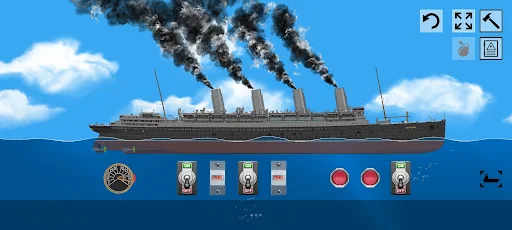
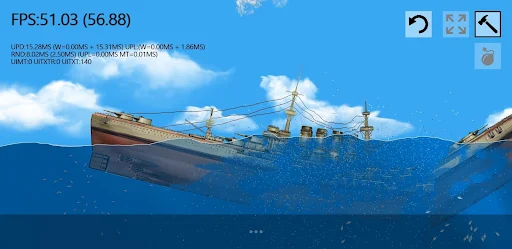
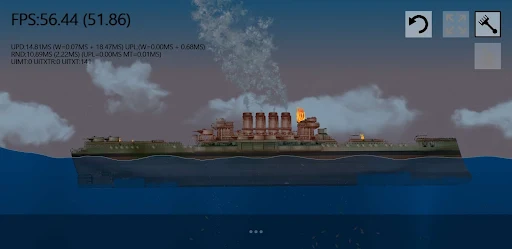
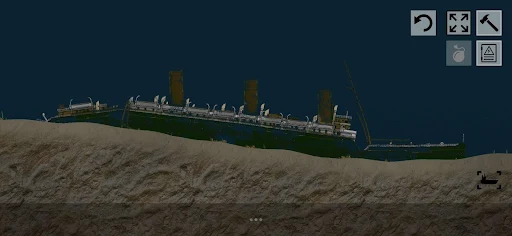
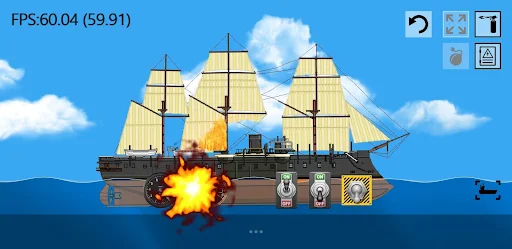
A typical session starts with loading one of the available ships and deciding what to test. You can punch holes, slice through a vessel, apply forces or heat, set it on fire, or use bomb explosions. Then the fun is watching the results unfold: water enters, the ship’s structure reacts, and a damaged vessel may slowly sink. There isn’t a conventional win screen at the heart of this loop; the experiment itself is the point.
When I first opened the simulation, I was struck by how much of the enjoyment comes from waiting and observing rather than constantly issuing commands. A small change can turn into a long sinking, giving me time to notice how the ship responds. I’d often start with one idea and end up trying a second kind of damage just to compare the outcome. It feels more like a physics playground than a fast-paced game.
For Curious Experimenters
Compared with games built around missions, scores, or combat, Floating Sandbox is unusually focused on cause and effect. Its subject is mostly ships floating on water, and the tools let you alter those ships and observe the consequences. That makes it a natural fit for players who like simulations, tinkering, and spectacle. It can also appeal to someone who wants a low-pressure game to explore in short bursts or settle into for a longer experiment.
It is not a ship-building game based on the available description, despite the temptation to imagine designing a vessel from scratch. Nor does it promise a campaign, a competitive mode, or a checklist of challenges. If you need clear objectives, frequent rewards, or a story to pull you forward, the open-ended setup may feel thin. I’d approach it as a simulator for playful experiments, not as a conventional action game with a progression track.
Useful First-Hour Habits
I’d begin by loading a ship and making one change at a time. Try a hole or a cut, then pause long enough to see how the vessel responds before adding more damage. That simple approach makes it easier to follow the cause-and-effect chain and enjoy the simulation instead of turning the whole screen into a jumble of effects. Once you have a feel for the ship, experiment with a different tool or kind of force.
The mobile version includes 41 ships according to the game description, so there is room to compare different starting points. I’d pick a ship that catches your eye, run a modest experiment, and then try the same idea on another vessel. Don’t expect every session to end with a dramatic sinking; part of the appeal is watching how an outcome develops. If you prefer immediate goals, set yourself a small personal question to test.
More From Our News Desk

Zoom Meetings, Google Meet, or Teams: Which Is Easiest to Join?

How I Build a Free Streaming Lineup With Tubi

Why Crunchyroll Is the Default Anime App for So Many Fans
YouTube TV: A Practical Guide to Cutting Cable
Rummikub and the Small Comfort of Phone Games
TeamViewer Remote Control or AnyDesk for Helping Family?
Who Will Enjoy It Most
I’d recommend Floating Sandbox to people who enjoy asking “what happens if I try this?” and then watching the answer play out. Players interested in ships, physics, or destruction simulations should find plenty to poke at. It also works for anyone who likes a relaxed, self-directed experience where a few minutes of tinkering can be satisfying without requiring a match, mission, or long-term commitment.
Players who rely on explicit objectives may bounce off sooner. The description centers on simulation tools and ship behavior, not a campaign or a series of challenges, so motivation has to come from your own curiosity. It may also be a poor fit if you want a fast, tightly directed game. I enjoyed it most when I treated each session as an experiment rather than expecting a steady stream of unlocks or plot developments.
Floating Sandbox is a paid simulation game from g2-labs. On Google Play it costs $4.49, has over 50,000 installs, and holds a 4.8-star rating from around 1,400 ratings. It does not contain ads or offer in-app purchases, so the listed purchase is the clear upfront cost. For a game built around open-ended experiments, that straightforward pricing is a practical plus.
Google Play gives the game an Everyone 10+ content rating. The listed version is 1.1.1.38, with a release date of December 17, 2025, and a last update date of August 9, 2026. The game description says it is still under development and receives free updates. It is presented for phones, tablets, and Chromebooks; the available Android version requirement can be checked on Google Play.
A Closer Look at the Simulation
Starting Without a Campaign
Getting into Floating Sandbox is less about learning a long chain of objectives and more about choosing a ship and testing the tools. The description makes the central idea clear: these are vessels on water, and you can damage or affect them in several ways. I found that direct premise easy to understand. A newcomer can start experimenting without first needing to commit to a story or a particular play style.
That freedom does put some responsibility on the player. The game’s appeal depends on deciding what you want to see happen, rather than waiting for the next instruction to arrive. I’d recommend treating the first session as a tour of the basic possibilities: load a ship, try one tool, and watch. Once the simulation’s rhythm makes sense, it’s easier to choose experiments that feel deliberate instead of simply applying everything at once.
Pacing and Outcomes
The pace is shaped by the ship’s response. Damage can be applied quickly, but the result may take time to develop, especially when a vessel begins to sink. I liked that contrast: the hands-on part is immediate, while the consequences invite a little patience. It gives the game a quieter rhythm than an arcade action title, with time to observe what the water and the damaged structure do.
There’s no conventional difficulty curve described here, so I wouldn’t buy it expecting a series of increasingly tough levels. Instead, you can make an experiment more involved by changing the tool, the force, or the starting ship. That flexibility is satisfying when curiosity is enough to keep you engaged. On the other hand, if you want a game to push you toward a defined next step, the self-directed pacing may feel aimless.
Tools and Ship Variety
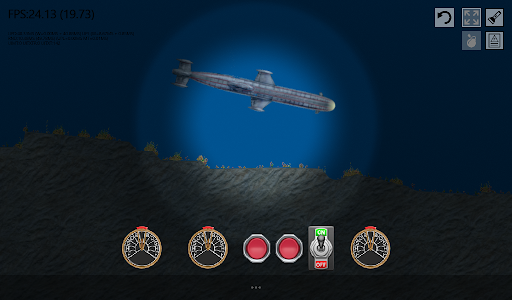
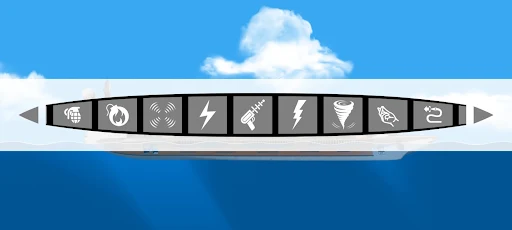
The standout feature is the range of ways to interact with a vessel. You can punch holes, slice, apply force or heat, start a fire, and trigger bomb explosions. The simulation combines a particle system and mass-spring networks with thermodynamics, fluid dynamics, and basic electrotechnics, according to the game description. Those ingredients support the central pleasure: making a change and watching the ship react rather than seeing a canned animation.
The mobile version is described as including 41 ships, with more being added through updates. That gives experiments some variety without changing the basic premise. I’d try the same sort of damage on different vessels to see how the results compare. The description also says the mobile version is receiving tools and features from the PC version through free updates, which suggests the experience is continuing to develop rather than remaining fixed.
A Clear Purchase
Floating Sandbox costs $4.49 on Google Play, and the game has no in-app purchases or ads. That means there is no advertised stream of optional purchases interrupting the simulation or asking for more money as you play. I appreciate that clarity in a game whose enjoyment comes from taking time to test ideas. The upfront price is easy to understand before you start, rather than being only the beginning of a spending loop.
Whether that price feels worthwhile depends on how much you enjoy open-ended simulation. Players who return to try different tools and ships may get more out of it than someone who wants a fixed set of levels. Google Play shows a 4.8-star score from around 1,400 ratings, which offers some context, but the practical question is still whether experimenting with ship physics sounds enjoyable to you.
Keep Its Scope in Mind
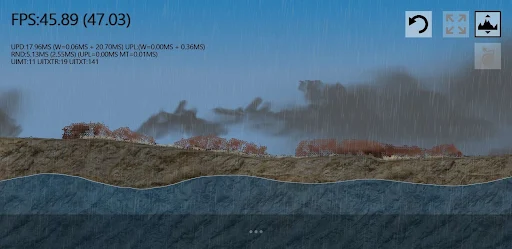
This is a focused simulator, not an all-purpose nautical game. Its main attention is on ships floating on water and on what happens when you damage or otherwise affect them. The description doesn’t present a campaign, multiplayer, or a ship-construction system, so I wouldn’t count on those to provide variety. The variety that is supported comes from the vessels, tools, and outcomes you choose to explore.
The game is presented for Android phones, tablets, and Chromebooks, but the minimum Android version is not included in the practical details here. I’d check Google Play for device compatibility before buying, especially if you plan to play on an older device. The description also doesn’t specify whether play requires an internet connection, so that’s another detail worth checking in the store if offline access matters to your routine.
Floating Sandbox works best when I arrive with a question, choose a ship, and give the simulation time to answer it. Its tools, ship variety, and unhurried sinking sequences make it an engaging physics playground, while the lack of a defined campaign keeps the experience firmly self-directed.
I’d recommend it to curious players who enjoy tinkering and watching consequences unfold, especially at a straightforward one-time price with no ads or in-app purchases. If you need missions, narrative, or constant goals, I’d look elsewhere. For everyone else, it’s a distinctive little simulator worth considering.
Floating Sandbox Frequently Asked Questions
Is Floating Sandbox free to play?
No. Floating Sandbox is a paid game on Google Play, with a listed price of $4.49. Store prices can vary by region or change over time, so check Google Play for the current amount before buying. There are no in-app purchases, which means the game does not advertise extra purchases after the upfront cost.
Does Floating Sandbox have in-app purchases or ads?
No. The game’s details say it has no in-app purchases and contains no ads. The listed Google Play price is $4.49, so it is a paid download rather than a free game with optional purchases. Store information can change, so it is sensible to check the current Google Play page before purchasing.
Can I play Floating Sandbox offline?
The available game information does not specify whether an internet connection is needed during play. If offline access is important, check the Google Play details or contact the developer before buying. The game is a 2D ship physics simulator, but that description alone does not establish whether every feature works without a connection.
Which devices support Floating Sandbox?
Floating Sandbox is described as an Android game for phones, tablets, and Chromebooks. The minimum Android version is not provided in the details here, so check Google Play for the requirement and device compatibility. The listed version is 1.1.1.38, though availability and compatibility can vary between devices.
Is Floating Sandbox suitable for children?
Google Play gives Floating Sandbox an Everyone 10+ content rating. The game involves damaging ships, fires, and explosions as part of a physics simulation. Families can review the store’s rating and description together to decide whether that content is a good fit for a particular child.
Pros
- A hands-on ship physics simulation with several ways to test cause and effect.
- The mobile version includes 41 ships, giving experiments different starting points.
- No ads or in-app purchases; the Google Play price is upfront.
- Slow, observable sinking sequences reward patience and curiosity.
Cons
- Its open-ended format may feel aimless without self-chosen experiments.
- The focus is narrow, centered mostly on ships floating and sinking.
- The minimum Android requirement and offline availability need checking in Google Play.
- Category
- Simulation
- Version
- 1.1.1.38