Fallout Shelter
- 3.89M
- 4.6
- Installs
- 50.00M
- Price
- Free

Screenshots


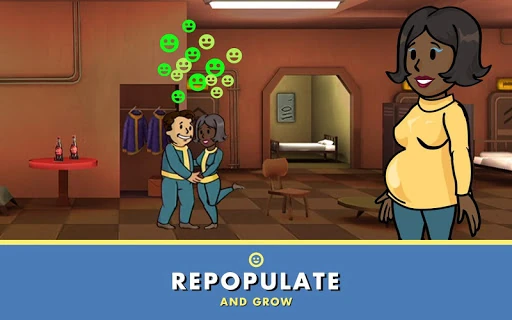
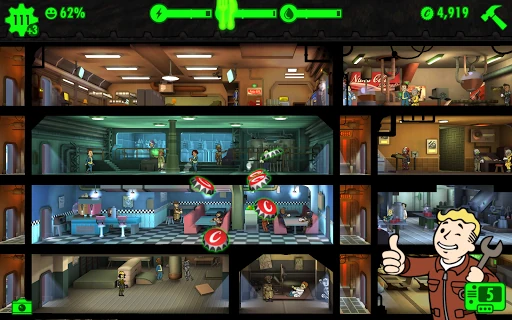
Analysis by Reviewed APKs
Fallout Shelter is a post-apocalyptic vault-building and management game where I take the role of Overseer, assign Dwellers to jobs, expand underground rooms, and send people into the Wasteland. It suits players who like gradual base-building and light character management more than constant action. After spending time with its routine of checking, adjusting, and expanding, I find it an easy game to revisit, though its steady pace will not suit everyone.
A Vault That Needs Attention
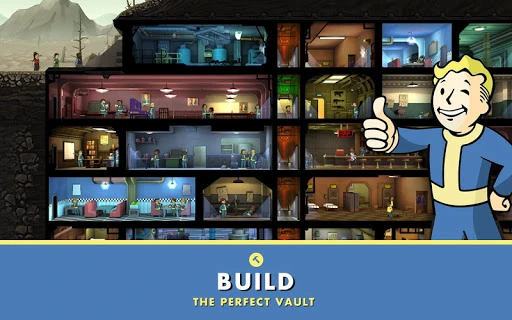
A typical session starts with a look around my Vault: I check how the community is doing, see which rooms need attention, and decide whether to build or improve something. Much of the play is about matching Dwellers to jobs and helping the underground settlement grow. Rooms have different purposes, so arranging a useful base and putting people in suitable roles gives me small, practical goals rather than one big objective.
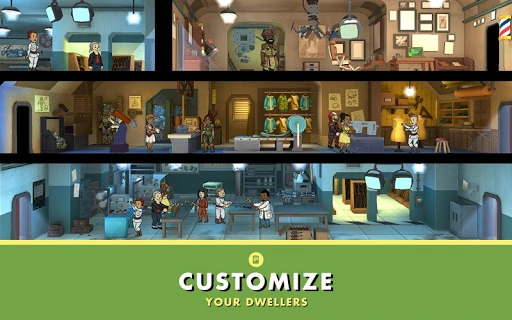
As the Vault develops, I can train Dwellers to improve their S.P.E.C.I.A.L. abilities, give them outfits and weapons, and send some out to explore or take on quests. Those trips bring back loot and experience, while the people at home keep the base running. I liked that mix of quick checks and longer plans: I could make a few changes during a short break, then return later to see how my decisions had worked out.
For Patient Builders
Fallout Shelter is a good fit if I want a compact management game with a clear setting and a community to look after. Compared with a more action-focused survival game, its main pleasure is arranging a functioning Vault and developing its residents. The Wasteland adds expeditions and danger, but the central experience stays focused on the people and rooms underground, not on direct, continuous combat.
It is not the best match for someone looking for a fast story campaign, intricate tactical battles, or nonstop input. The rhythm leans toward planning and tending a settlement, with progress built from repeated small decisions. I also would not approach it as a pure building sandbox: Dwellers, their jobs, and their abilities matter alongside room expansion. Players who enjoy watching a little community take shape are more likely to connect with it.
Good First-Hour Habits
When I first opened Fallout Shelter, the useful mindset was to treat every Dweller as part of the Vault’s workforce, not just as a name on a screen. I would start by learning the different rooms and assigning people to roles that suit their strengths. The game also lets me train S.P.E.C.I.A.L. abilities, so I can build toward better assignments over time instead of expecting every resident to do every job equally well.
I found it helpful to expand with a purpose rather than build rooms just because I could. Think about what the Vault needs next, keep an eye on the people already living there, and use gear to prepare Dwellers before sending them into the Wasteland. Exploration can earn useful loot and experience, but it comes with danger. In the early hours, I would make sure a trip has a reason and avoid treating every Dweller as expendable.
More From Our News Desk

Zoom Meetings, Google Meet, or Teams: Which Is Easiest to Join?

How I Build a Free Streaming Lineup With Tubi

Why Crunchyroll Is the Default Anime App for So Many Fans

YouTube TV: A Practical Guide to Cutting Cable

Rummikub and the Small Comfort of Phone Games
TeamViewer Remote Control or AnyDesk for Helping Family?
Who Will Enjoy the Vault
I would recommend Fallout Shelter to players who like low-pressure base management, gradual progression, and the small satisfaction of improving a community one decision at a time. It works well for someone who enjoys checking in, moving Dwellers to better jobs, planning a new room, or preparing an expedition. Fallout fans may also appreciate spending time in a setting built around Vault life, but the game’s management loop is the main draw.
Players who need frequent action, a tightly directed narrative, or a quick conclusion may bounce off its measured pace. The routine can feel repetitive if assigning workers and making incremental improvements are not appealing on their own. There is danger in the Wasteland and threats to manage, but this is still a simulation first. I think it is best for people happy to let a settlement grow through a series of small, ongoing choices.
Fallout Shelter is a free simulation game from Bethesda Softworks LLC. On Google Play it has over 50 million installs and a 4.6-star rating from about 3.9 million ratings. The game is rated Teen. Its listed Android version is 2.7.0, and it was released on August 12, 2015.
The game contains ads and offers in-app purchases. Google Play lists individual in-app product prices from $0.99 to $99.99. The game description presents Fallout Shelter as an offline experience, so it can suit play without a connection. The minimum Android version is not included in the available store facts, so check the Google Play page for device compatibility.
The Daily Rhythm of Vault Life
Learning the Overseer Role
The basic premise is easy to grasp: I oversee an underground community, build specialized rooms, and place Dwellers where they can contribute. The first stretch is about getting a sense of how the pieces fit together. Residents have jobs, abilities, and equipment to consider, so the game gives me more to think about than simply filling every space with another room.
I liked that the management theme is visible in ordinary choices. A Dweller’s role can make more sense once I have considered their strengths, and training gives me a way to develop those abilities. Outfits and weapons add another layer when I prepare someone to leave the Vault. The onboarding is less about mastering complicated controls and more about learning to connect people, rooms, and future plans.
Progress at a Steady Pace
Progress feels incremental. I expand the Vault, make use of its rooms, and develop Dwellers through jobs and training. That pace is comfortable when I want a game I can revisit in small stretches. It also means that the pleasure comes from seeing a settlement improve, rather than rushing through a dramatic sequence of levels or reaching a quick ending.
Difficulty comes from balancing the needs of a growing base with the risks of sending residents into the Wasteland. Exploration can bring back loot, experience, and Caps, but the description makes clear that expeditions can also end badly. I found that risk gives trips a useful sense of purpose. Still, players who prefer immediate rewards and constant novelty may find the longer, gradual cycle less engaging.
Beyond the Main Vault
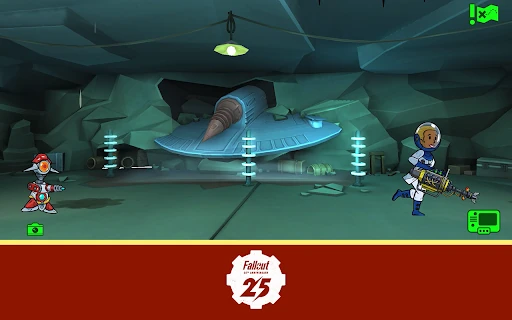
The Wasteland gives the game a change of scenery from room planning. I can send Dwellers above ground to explore, encounter other people, and bring equipment and other loot back. Quests add another reason to prepare residents, while the prospect of improving their abilities and gear connects those outings to the Vault’s ongoing development.
There are also Seasons with limited-time Vaults, described as experimental shelters separate from the main one, and themed locations with season-specific in-game rewards. That separate setup is a welcome variation on the central management routine. The game also includes a Barbershop for changing a Dweller’s look and a Radio Room that can recruit new residents or support repopulating the Vault.
I appreciated that these additions still orbit the same core idea: building a community in a hostile world. They broaden what I can do without turning Fallout Shelter into a different genre. The Wasteland, training, customization, and seasonal Vaults give me several directions to pursue, though players should expect the underlying loop of managing people and resources to remain central.
Spending and Free Play
Fallout Shelter is free to download on Google Play, but the store facts also show ads and optional in-app purchases. Individual purchase prices range from $0.99 to $99.99. That is a wide range, so I would check the purchase details in the store before spending. The game’s description includes lunchboxes as a way to get a chance at collecting Legendary Dwellers.
The presence of purchases does not change the basic appeal of the management loop: assigning jobs, building rooms, training residents, and sending out explorers. But the option to buy items is worth keeping in mind, especially if I prefer games with no spending prompts or ads. My practical recommendation is to decide in advance whether I want to spend and treat purchases as optional rather than necessary to enjoy the premise.
A Few Things to Consider
The game is described as playable offline, which makes it a reasonable choice for a commute or a spot with unreliable service. The store facts do not provide a minimum Android version, though, so device compatibility is something to check on Google Play before installing. Fallout Shelter is rated Teen, a detail parents and younger players should consider when deciding whether it is an appropriate fit.
The main limitation is the nature of the routine. A growing Vault needs attention and planning, and much of the play comes from repeating familiar management choices. Players seeking a focused, linear story or hands-on action may not find enough variety in that cycle. The Wasteland and seasonal Vaults add different activities, but they do not remove the game’s emphasis on overseeing a settlement.
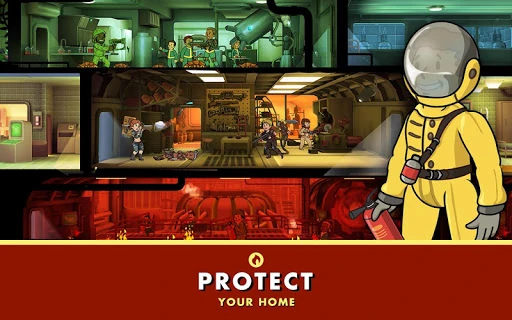
I also would not mistake its friendly presentation for a risk-free management game. The description includes hostile threats and the possibility that a quest can fail. That danger gives exploration some stakes, but it asks me to prepare residents and accept uncertainty. If I enjoy planning around those risks, they make the outings more interesting; if I want a completely relaxed builder, they may be a drawback.
Fallout Shelter works best as a patient, approachable management game about building a community underground. I enjoyed the interplay between assigning Dwellers, improving their abilities, and sending prepared explorers into the Wasteland. Its greatest strength is how those small jobs add up to a Vault that feels like my own project.
I recommend it to players who enjoy settlement-building and are comfortable with a gradual loop, ads, and optional purchases. If you want rapid action or a tightly scripted campaign, this probably is not your next game. For an easy-to-return-to Fallout-flavored simulation, though, it remains an appealing place to take the Overseer’s chair.
Fallout Shelter Frequently Asked Questions
Is Fallout Shelter free to play?
Yes. Fallout Shelter is free to download on Google Play. The store facts also show ads and optional in-app purchases, so free access does not mean the game has no monetization. I would check the store page for current purchase details before downloading or buying anything.
What in-app purchases does Fallout Shelter offer?
Fallout Shelter offers in-app purchases, with Google Play listing individual item prices from $0.99 to $99.99. Its description also mentions lunchboxes, which give a chance to collect Legendary Dwellers. The available information does not establish that any purchase is required, so check the store for the current items and prices.
Can I play Fallout Shelter offline?
The game description calls Fallout Shelter an offline base-building game, so it is presented as playable offline. If you plan to use a particular feature or download the game, connectivity needs may vary; check the current Google Play information for details.
Which devices can run Fallout Shelter?
Fallout Shelter is available on Google Play for Android. The minimum Android version is worth checking on its store page, since device requirements can vary. The listed game version is 2.7.0, but that alone does not determine whether a particular phone or tablet is compatible.
Is Fallout Shelter suitable for younger players?
Fallout Shelter has a Teen content rating on Google Play. The game involves a post-apocalyptic setting, hostile threats, and the risk of failure on quests. Parents and players should review the store’s current rating details and decide whether the content is suitable for their household.
Pros
- A satisfying mix of Vault construction, Dweller management, training, and Wasteland exploration.
- Gradual goals make it easy to return for short sessions and continue improving the community.
- Seasonal Vaults and quests add variety around the central settlement-management loop.
- Offline play is described, making it practical when a connection is unavailable.
Cons
- The repeated management routine may feel slow or repetitive to action-focused players.
- Ads and in-app purchases are part of the free-to-play experience.
- Exploration includes risk, so quests may not always return with the hoped-for rewards.
- Category
- Simulation
- Version
- 2.7.0