SAKURA School Simulator
- 3.16M
- 4.5
- Installs
- 100.00M
- Price
- Free

Screenshots
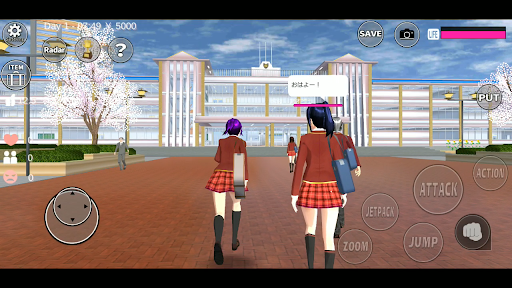
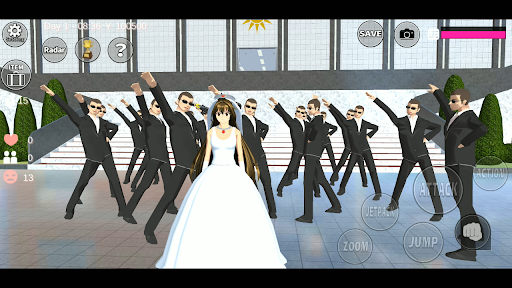
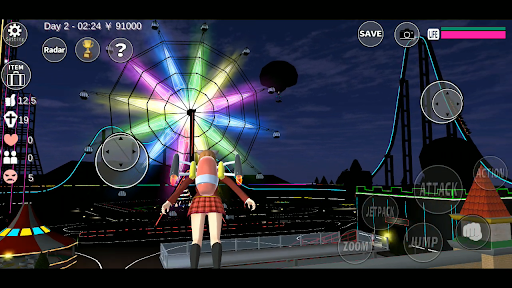
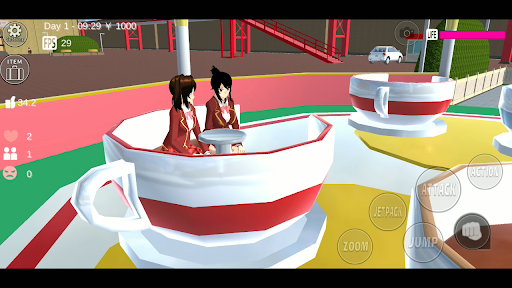
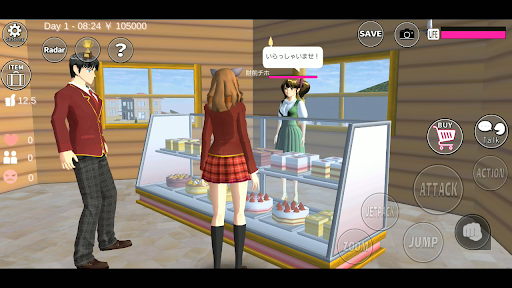
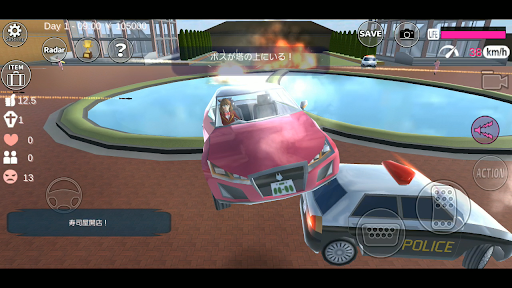
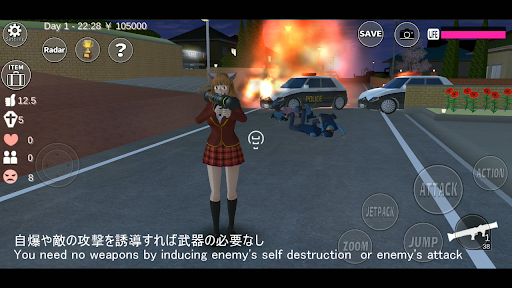
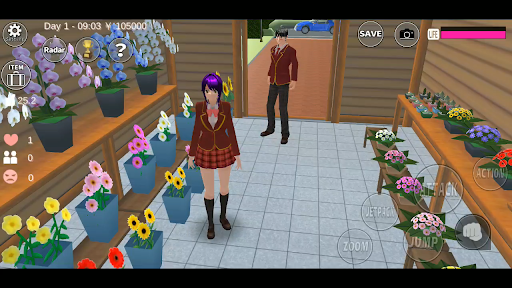
Analysis by Reviewed APKs
SAKURA School Simulator is an open-ended school-life simulation with a playful, anything-can-happen approach. You can build friendships, talk with people, or turn the school day into a slapstick showdown; there is no fixed ending pushing you toward one outcome. I like that freedom, though the busy world can be demanding on older phones. It suits curious players who enjoy making their own stories more than following a traditional mission campaign.
A school day your way
When I first opened SAKURA School Simulator, what stood out was that it does not funnel me through a single story. I can spend a session making friends and exploring social interactions, or choose a more chaotic route. Talking options can change, and the game leaves room to experiment rather than insisting there is one correct solution. That makes a short visit feel like a chance to set up my own little scene.
The central loop is simple in concept: move around the shared school-world setting, interact with its people, and decide what kind of situation to create. If conflicts come up, fighting is only one option. The game says enemies can be defeated in different ways, and it is also possible to avoid fighting them. When someone is stunned, they wake up the next day and will dislike you, so actions can carry a small social consequence.
For players who like improvising
Compared with a school-life game built around a schedule or a set of missions, SAKURA School Simulator is more like a sandbox for trying out situations. Its two broad directions—social school life or mayhem—give it a distinctive, deliberately loose feel. I enjoyed being able to change my plans mid-session instead of worrying about completing a checklist. The no-ending structure is a good fit for players who like returning to a familiar world and making their own fun.
That freedom also means this is not a tightly guided narrative, a competitive game, or a realistic school-management simulator. Players looking for clearly signposted objectives, a fixed plot, or a carefully paced sequence of challenges may find it aimless. The game’s tone is exaggerated, and its action is non-lethal: characters are stunned rather than killed. I would approach it as a playful simulation, not as a serious depiction of ordinary school life.
A few useful first steps
In my first hours, I would start by reading the in-game Help rather than guessing at every control or interaction. The developers specifically point players there when questions come up. It is also worth deciding what kind of session you want before you start: making friends and exploring conversations gives the game a different feel from picking fights. Since there is no final endpoint, small personal goals can make an otherwise open-ended visit more satisfying.
I would also keep the performance advice in mind early. The game recommends more than 3 GB of RAM and a Snapdragon 820 or better for smooth play, and it warns that weaker devices may lag, shut down, or run into memory problems. Closing other apps and lowering the number of students and people in settings can help. If trouble starts, the description suggests restarting the game or device as another practical step.
More From Our News Desk

Zoom Meetings, Google Meet, or Teams: Which Is Easiest to Join?

How I Build a Free Streaming Lineup With Tubi

Why Crunchyroll Is the Default Anime App for So Many Fans

YouTube TV: A Practical Guide to Cutting Cable
Rummikub and the Small Comfort of Phone Games
TeamViewer Remote Control or AnyDesk for Helping Family?
Who will enjoy the freedom
I would recommend SAKURA School Simulator to players who like open-ended role-play and do not mind inventing their own reasons to explore. It works well for someone who wants to drop in, try a different social interaction, or see how a situation plays out without committing to a long campaign. The ability to switch between a friendly school-life approach and a more chaotic one gives imaginative players plenty of room to set their own tone.
Players who need a clear mission trail, a polished competitive loop, or a calm experience on modest hardware may bounce off. The game can make substantial demands on a device, and its freedom may feel like a lack of direction if you want the next objective spelled out. Its Teen content rating is also worth considering for families. I see it as best for players comfortable with cartoonish conflict and self-directed play.
SAKURA School Simulator is a free simulation game on Google Play from GARUSOFT K.K. It has more than 100 million installs and a 4.5-star rating from around 3.2 million ratings. The game contains ads, but Google Play says it does not offer in-app purchases. Its content rating is Teen.
The current version shown is 1.048.19, and the release date is October 10, 2018. The description recommends more than 3 GB of RAM and a Snapdragon 820 or better for smooth performance; it does not give a minimum Android version. Those are useful device guidelines rather than a promise that every phone at that level will behave the same way.
Making Your Own School Stories
Starting without a set route
The first thing to understand is that the game is a simulator, not a guided campaign with a clear finish line. You choose whether to focus on social life or stir up trouble, and the world is meant to be played in your own way. I found that expectation important: without it, the open structure can seem as if it has forgotten to tell you what to do.
The built-in Help is the most practical place to turn when an interaction or system is unclear. The description also notes that some dialogue choices can change randomly, so conversations are not necessarily a fixed script to memorize. That gives encounters a little unpredictability, though players who want precise control over every line may find the shifting dialogue less satisfying.
You can control and change among four characters in the same stage. Two of those are available after watching ads, according to the game description. I would treat that as an optional way to vary who you play, rather than something you need to understand the basic idea of the game.
Progress at your own pace
There is no ending to work toward, so progression is less about reaching a final chapter and more about the situations you choose to create. That makes the pacing unusually flexible: I can spend a few minutes trying a conversation, or take longer to explore how a social approach differs from an aggressive one. The trade-off is that players who rely on unlocks or escalating objectives for motivation may want more structure.
Difficulty is not presented as a conventional ladder of increasingly tough missions. Instead, the game emphasizes finding different ways to handle enemies, including ways that do not involve fighting. If I do choose violence, the consequences are framed in the game world as characters being stunned and waking the next day with a grudge, rather than as permanent deaths.
That loose design rewards experimentation more than optimization. I would set a simple goal for each visit—try a different approach, talk to people, or see what happens after a choice—so the freedom feels purposeful. The game does not promise that every activity will lead to a dramatic new stage, and its appeal depends on enjoying the process itself.
Social play and slapstick action
The most defining feature is the contrast between two very different ways to spend time: making friends and pursuing a school-life fantasy, or going on a rampage. The game makes both part of the same open simulation rather than locking the player into one tone. That contrast is what makes it memorable to me, and it also means each player can decide how silly or social a session should be.
The action is intentionally non-lethal. The description says there is no blood, that people are only stunned, and that death does not exist in this game world. They wake up the next day and hate the player if they were attacked. This makes the conflict cartoonish, though it is still conflict and may not suit everyone.
The game also encourages looking for alternatives instead of assuming every enemy must be beaten in a direct fight. There are multiple ways to approach encounters, while weapons can be obtained from the Yakuza office. I would not mistake those elements for a deep combat campaign; they serve the simulator’s anything-can-happen style.
Ads and a free download
Google Play lists the game as free, with ads and no in-app purchases. That is a straightforward arrangement for someone who wants to try the sandbox without paying an upfront price. Ads also have a specific gameplay connection: the description says two of the four switchable characters become available after watching ads. It does not give a full account of every ad placement, so the store page is the best place to check current details.
I would keep expectations grounded rather than assume an ad-free experience. The game’s own description points to ads for access to those additional characters, but it does not state that spending money is needed to enjoy the core premise. In practice, the choice between social play and mischief is the main draw, not a paid progression system.
For a free game, the bigger practical consideration may be whether your device runs it comfortably. The developer warns that the simulation uses substantial CPU and GPU resources. Closing other apps and reducing the number of people on screen are suggested ways to improve smoothness, and that can matter more to the experience than a purchase decision.
Keep hardware in mind
The clearest limitation is performance on less capable devices. The developer recommends over 3 GB of RAM and a Snapdragon 820 or better, and warns that lag, shutdowns, and low-memory problems can occur below that level. Since the game uses a lot of CPU and GPU power, I would avoid running several other demanding apps at the same time.
If performance falters, the suggested remedies are practical: close other apps, restart the game or device, and lower the number of students and people in settings. These steps may help, but they cannot guarantee smooth play on every phone. I would keep that caveat in mind before settling in for a longer session.
The description does not establish whether play requires an internet connection, so I would check the current Google Play information if offline access matters to you. The same goes for device compatibility details beyond the stated hardware recommendation. The game’s open-ended design is flexible, but its technical demands are a real part of deciding whether it fits your routine.
SAKURA School Simulator is at its best when I treat it as a toy box for making small stories, not as a campaign that owes me a clear destination. Its unusual mix of school-life interactions and slapstick mayhem gives each session room to change direction. The lack of a fixed ending is freeing for some players and a real weakness for others.
I recommend it to curious players who enjoy self-directed simulation and have a device that meets the game’s performance guidance. I would skip it if you need a tightly organized story or dislike ads and unpredictable performance. For everyone else, it is an unusual, free sandbox worth trying with modest expectations.
SAKURA School Simulator Frequently Asked Questions
Is SAKURA School Simulator free to play?
Yes. Google Play lists SAKURA School Simulator as free to download. The game contains ads, and its store information says it does not offer in-app purchases. The description also says that watching ads makes two of the four switchable characters available, so ads are part of at least one optional character access feature.
Does SAKURA School Simulator have in-app purchases?
Google Play says SAKURA School Simulator does not offer in-app purchases. It does contain ads, including ads connected to access to two of the four characters that can be controlled in the same stage. Ad behavior can change, so the current store page is worth checking if you want the latest details.
Can I play SAKURA School Simulator offline?
The game description does not say whether SAKURA School Simulator works offline. If offline play is important, check the current Google Play information or try it on your device before relying on it without a connection. The game does describe ads as part of access to two characters, which may affect that feature.
What devices can run SAKURA School Simulator?
SAKURA School Simulator is an Android game. Its description recommends more than 3 GB of RAM and a Snapdragon 820 or better for smooth performance, and warns that weaker devices may lag, shut down, or run into memory problems. The minimum Android version can vary, so check Google Play for device compatibility.
Is SAKURA School Simulator suitable for children?
Google Play rates SAKURA School Simulator Teen. The description says the game has no blood and characters are stunned rather than killed, but it includes the option to attack people and obtain weapons. Families should consider that content and check the store’s current rating information when deciding whether it suits a player.
Pros
- Open-ended play supports both social school-life scenes and deliberately chaotic sessions.
- Multiple approaches to encounters make experimentation more appealing than a single combat solution.
- No in-app purchases are listed, and the game is free to download.
- Non-lethal, blood-free conflict keeps the action cartoonish rather than graphic.
Cons
- The lack of an ending or clear objectives may leave goal-oriented players without direction.
- The developer warns that the game can lag or shut down on less capable devices.
- Ads are present, including for access to two switchable characters.
- Category
- Simulation
- Version
- 1.048.19